
Laura and I were in the same eighth grade class. Here’s a conversation between the two of us about Eighth Grade (2018).
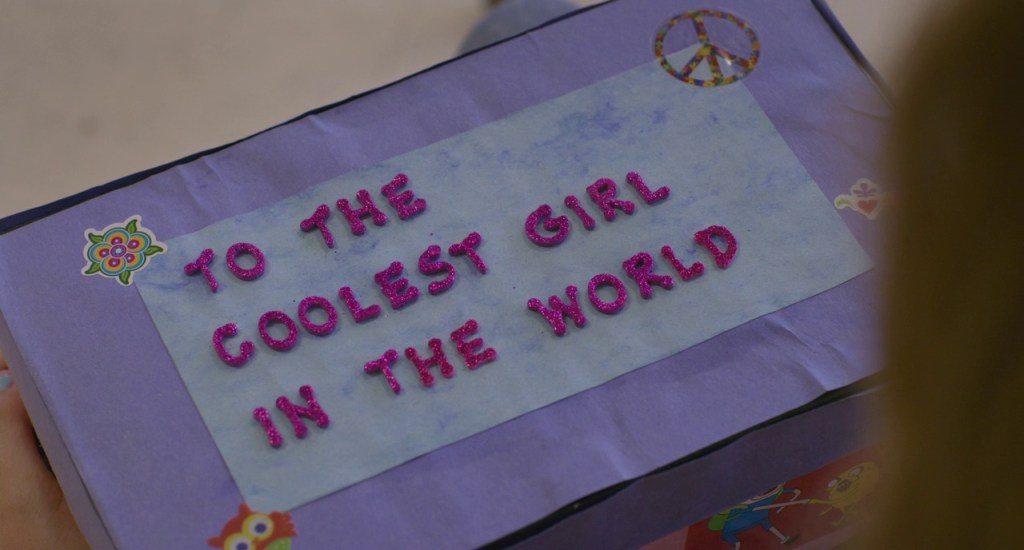
Laura and I were in the same eighth grade class. Here’s a conversation between the two of us about Eighth Grade (2018).
Paris is Burning is a film about queer people of color directed by a white lesbian. This fact evokes the convoluted emotions behind conflict of authorship: who has the right to tell what story? I disagree with a white person making the film, but agree with giving queer people of color a platform to express themselves and tell their stories. Jennie Livingston’s queer identity certainly helps.
At the center of Paris is Burning is its portrayal of a very real queer phenomenon: chosen family. Balls are their family gatherings and there are family units within the community, blood relation not required (for example: The Xtravaganza Family). Like a nuclear family, there are parents and children and a shared last name. I don’t know about director Jennie Livingston’s personal life, but I do know that, as a lesbian, the concept of chosen family, of assembling a unit of support in which there are no blood relations, is something she may be able to relate to.
The Balls see the participants working through multiple categories, perhaps the most fascinating of which being a sort of anti-drag drag. While voguing and sequins are in abundance, one category forgoes the glitz and glamour in favor of ‘passing’. That’s the point of the category: ‘passing’ as cisgender and/or heterosexual. While lesbians aren’t known to favor extravagance and flamboyance, everyone in the queer community experiences more privilege when they learn how to ‘pass’.
I’m on board with a queer person directing a movie about queer people and their niche within queer culture, but uneasiness comes with Jennie Livingston’s race. She is also not a trans person. The intersectionality between race, sexuality, and gender is where the conflict of authorship lies. It’s not ideal that a cisgender white person directed a film about queer people of color, but at least the story is told, and by another queer person.
I disagree with the notion Tangerine is a regressive film. Not every film centered around a marginalized group has to dissuade people from believing in stereotypes: Tangerine simply presents the characters as they are. It’s up to the viewer to apply stereotypes or not.
Are the main characters portrayed as angry black women, one of the most negative and harmful stereotypes surrounding women of color? Sure, but, don’t they have a reason to be angry? What would the point to seeing these women act rational and calm be? Sin-Dee and Alexandra’s circumstances are dire and their actions are warranted, stereotypes be damned. The stakes are high and their tempers rise with them.
New York Times contributor Manohla Dargis writes: “What’s radical about “Tangerine” isn’t identity — which enters directly and obliquely, playfully and powerfully — but that Sin-Dee and Alexandra aren’t limited by it.” Their sexual orientations, gender identities, and racial identities do not limit them: they act just as they want to and not by progressive guidelines.
If you’re watching Tangerine and feel uncomfortable because black trans women are sex workers, engaging in drug use, and committing acts of violence and you feel it casts a negative light, that’s okay. It is not the film’s job to reverse stereotypes or be a redemption story: its job is to tell the truth.
Halloween is set in fictional Haddonfield, Illinois. Haddonfield, Illinois could be anywhere in the United States: any quiet suburb is subject to the greatest terror. While Haddonfield doesn’t exist, the City of Angels does, an equally, if not more, terrifying location. Kids trick-or-treat on Genesee, a Los Angeles street that begins south of Hollywood Blvd in the Nichols Canyon neighborhood and ends at Beverly Blvd in the Fairfax district. The Haddonfield Hardware store is located at Mission Street in South Pasadena, a truly quiet and residential town.
People move to places like Haddonfield to experience a quiet and routine existence: to raise children, make a home, and feel safe. It’s where Laurie, Annie, and Lynda can walk to and from school unaccompanied, but it’s also where Michael Myers can lurk with a knife in between houses.
Halloween’s premise would be greatly altered had it been set in an urban landscape. This provides too many witnesses: a heightened sense of awareness due to the packed environment. Because the suburbs and surrounding rural areas are quiet, Michael Myers is able to escape and blend with the stagnant landscape, especially on Halloween when he can pass as a tall kid in a boogie man costume.
Haddonfield’s picturesque predictability is an opportune location for chaos. The pieces of the suburban puzzle fit perfectly together: Annie and Laurie–two teenage girls–are practicing domesticity on Halloween night as they babysit Lindsey and Tommy. The boys fulfill their roles as purveyors of alcohol and sex who are mostly out of the house. The supposed suburban heroes–the men of the house–cannot protect the women and children from terror.
The suburbs are the ideal setting for Halloween because of its genericism: no one expects a boogie man.

 Film, Gender, Sexuality / Spring 2020